
By David Parker Brown, on September 1st, 2011 at 2:15 pm
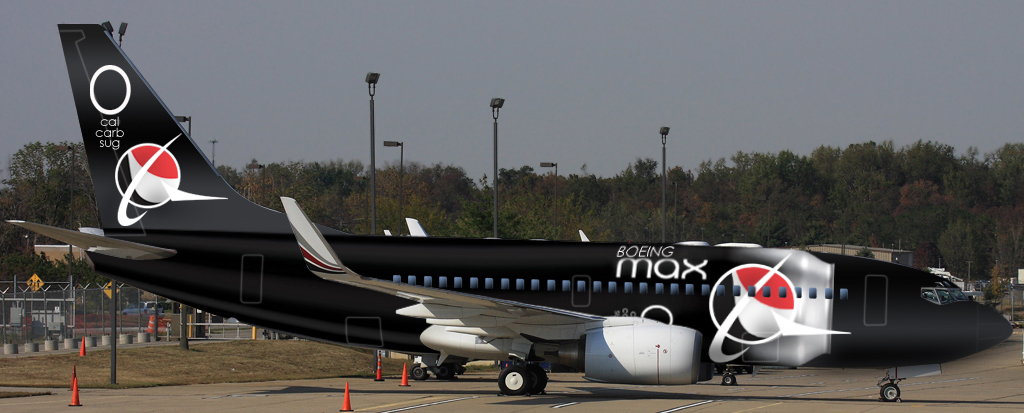
Is this the new Boeing 737 MAX livery? Nope, but a great Photoshop by Lyle Jansma.
There are two stories with the unveiling of the new Boeing 737 MAX: the actual aircraft (which promises greater efficiency) and the choice of the name “MAX.” When I heard about Boeing’s name for their 737 re-engine, for some odd reason, I got really thirsty and wanted a Pepsi… weird. While this story should lead with the differences of the new 737, I feel I have to talk about the new name first, since it is the most shocking.
Boeing is a smart company that makes respected aircraft. They have a history of creating legendary names: Stratocruiser, Stratoliner, and of course Dreamliner. The name “MAX” is just not in the same category in my opinion — it seems lazy and very “been there, done that.”
There has been a lot of speculation on what Boeing might call their 737 Re-engine: the 737RE, 737-8, 737NNG. Many people have been excited to find out the new name. Reading different reactions on the internet, it appears I am not the only one who is disappointed.
According to Boeing, these next, next generation aircraft will be written as the “737 MAX 7″, “737 MAX 8″ and “737 MAX 9″ without dashes. I think I might be writing them as 737-7, 737-8, 737-9 with dashes and no “MAX.”
The 737 Next Generation was a great name. I even like Airbus’ new A320neo name to describe their more efficient aircraft to compete with the 737.
Yes, I understand the ideas behind Boeing choosing this name, but it doesn’t mean the name works. During the press conference announcing the re-engined 737, Nicole Piasecki explained why Boeing chose the MAX name. “We wanted the name to capture how exceptional the 737 is not only to in terms of its performance but we wanted it to be able to differentiate the 7, 8 and 9. We wanted to make sure the name was easily identifiable from 4-year olds up to 90-year olds and we wanted to make sure that it represented the best that it will truly be… We thought about how do you convey superiority, the best, the gold standard in single-aisle airplanes. And how do you come up with a name to describe already a great airplane. We wanted to make sure that it talked about what it was going bring to the industry in terms of maximum benefit, maximum competitive advantage for our customers, maximum value and absolute maximum in what an airplane could deliver to our customers. So we came up with something that fit that and we will be calling this airplane the 737 MAX.”
With all the creative and smart people at Boeing this is the best (er max) that they could do?
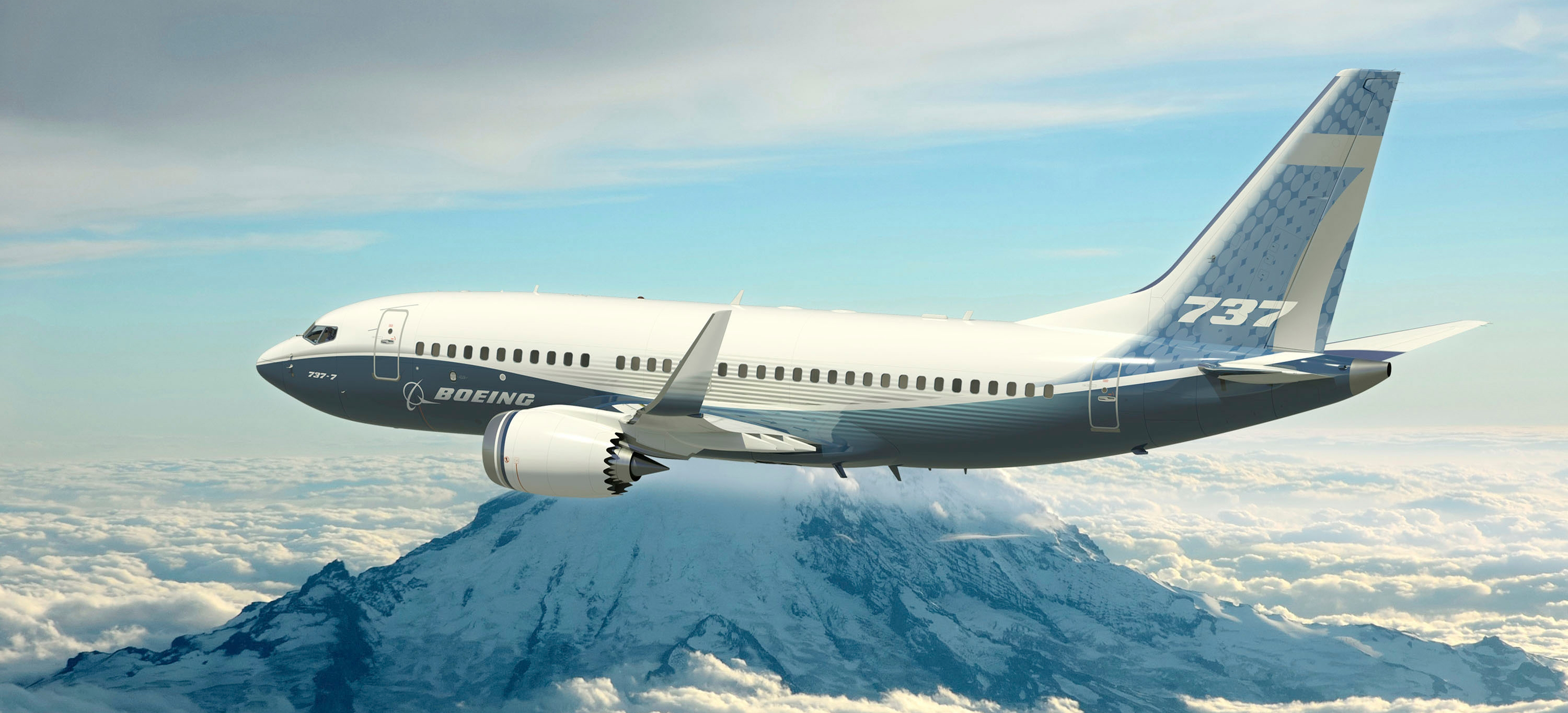
I like the new real livery of the 737 MAX, but not so sure about the name. Image from Boeing.
Will an airline not choose this aircraft because of the name? Of course not. They are going to care more about the performance and the bottom line. Going with a re-engine 737 versus a whole new product makes sense. Airlines have already showed a strong demand for an updated single-aisle aircraft sooner rather than later. Going with a re-engined 737 will allow Boeing to improve the 777 and develop additional models for the 787.
There are already496 orders for the new MAX aircraft from five airlines. Those that already have 737NG’s on order will most likely have the opportunity to change over to MAX aircraft.
Boeing states the 737 MAX will have a 16% less fuel consumption than their “competitor’s current offering” (we will assume that is the Airbus A320) and it will have 4% less than the A320neo. The new plane will use CFM International LEAP-1B engines and is expected to have its first delivery sometime in 2017.
So what are your thoughts? Do you like the 737 MAX name?
Boeing 737 Pepsi MAX livery done by Lyle Jansma
Comentários
Postar um comentário
Participe, deixe seu contato!